USE Coupon USA10 For 10% OFF
Days
Hours
Mins
Secs
USE Coupon USA10 For 10% OFF
Days
Hours
Mins
Secs


Your kitchen is the heart of your home, but it’s also a magnet for grease, steam, and food splatters that can dull your cabinetry over time. Whether you’re planning a full remodel or just maintaining your current setup, knowing how to clean kitchen cabinets properly is essential to protecting your investment. In this guide, we’ll walk you through a proven, gentle method to remove grime without damaging your beautiful wood finish.
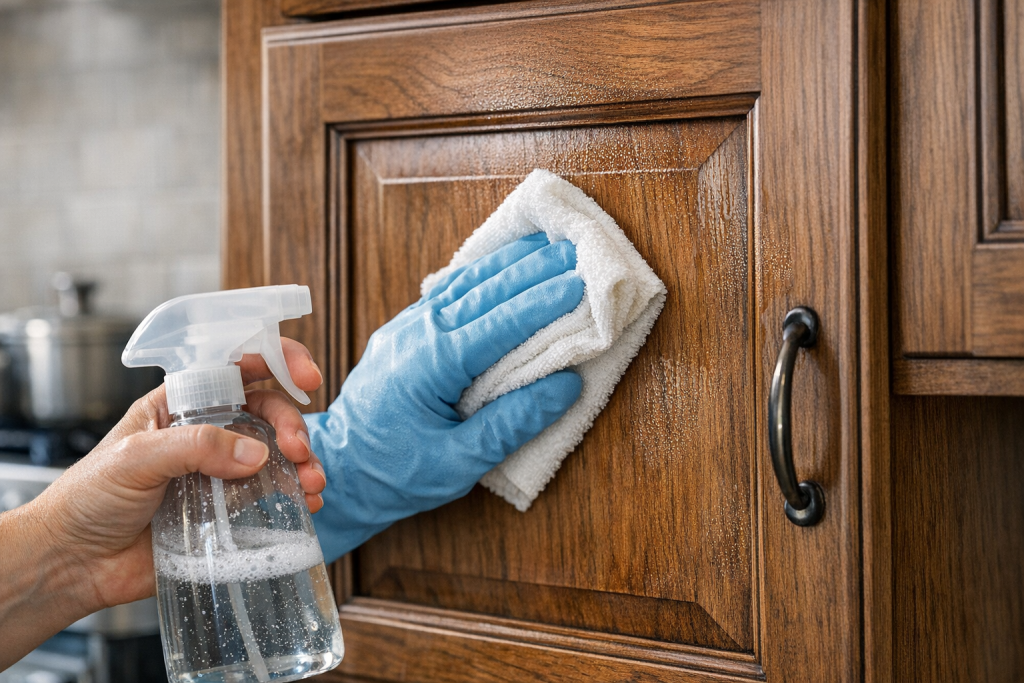
Before grabbing a sponge, it’s critical to identify exactly what your cabinets are made of, as this dictates the safe cleaning method.
Most premium cabinetry, including the lines we design at USA Cabinets, features solid wood frames and high-grade plywood boxes rather than particle board. While solid wood and plywood offer superior durability and longevity compared to laminate or thermofoil, they’re also natural materials that react to moisture and harsh chemicals. Wood is porous and can absorb liquids if they’re left to sit, leading to warping or finish degradation.

For solid wood and plywood construction, we always recommend gentle, pH-neutral cleaning methods. Strictly avoid abrasive pads, steel wool, or harsh commercial degreasers that contain ammonia or bleach, as these can strip the protective topcoat. If you’re unsure about your cabinet’s finish—whether it’s a painted opaque finish or a stained natural look—start with the mildest solution possible. Treating your high-quality cabinets with care means they’ll remain a stunning focal point in your home for decades.
You don’t need expensive, specialized products to achieve a deep clean. In fact, simple household ingredients are often safer and more effective for wood cabinets.
To clean kitchen cabinets without leaving scratches or residue, gather the right tools first. We recommend using a microfiber cloth for both washing and drying. Unlike paper towels, which can be abrasive and leave lint, microfiber traps dust and grime effectively while being gentle on the finish. You’ll need at least three cloths: one for the cleaning solution, one for rinsing with plain water, and a third for drying.

For the cleaning solution, skip the harsh chemicals. A mixture of warm water and mild dish soap is the gold standard for cutting through everyday grease. For tougher spots, baking soda and white vinegar are powerful natural allies. Below is a comparison of safe versus unsafe cleaning agents for wood cabinetry:
| Cleaning Agent | Safety Level | Best Use Case |
|---|---|---|
| Dish soap & warm water | ✅ Safe | General cleaning, light grease, everyday maintenance. |
| Vinegar & water (50/50) | ✅ Safe (use sparingly) | Removing sticky residue or moderate grease buildup. |
| Baking soda paste | ✅ Safe (non-abrasive) | Spot-treating stubborn stains or dried food splatters. |
| Ammonia / Bleach | ❌ Unsafe | Never use; damages wood fibers and discolors paint. |
| Abrasive scrub pads | ❌ Unsafe | Causes micro-scratches that dull the finish over time. |
| Magic erasers | ⚠️ Caution | Generally too abrasive for polished wood finishes. |
Cleaning your cabinetry doesn’t have to be an overwhelming chore if you break it down into a structured process.
Preparation is key to an effective deep clean. Start by emptying your cupboards completely if you plan to clean the interiors, or at least removing items from the countertops directly below the upper cabinets to prevent dripping on your appliances. This is also a great opportunity to declutter and check for expired items.
Once the area is clear, use a dry microfiber cloth or a vacuum with a soft brush attachment to remove loose dust and cobwebs. Pay special attention to the corners of recessed panels (like Shaker style doors) and the tops of the cabinets where dust accumulates. Removing this dry debris first prevents you from creating a muddy sludge when you apply liquid cleaners later.
For the majority of cabinet surfaces, a gentle soapy mixture is the best method. Mix approximately one teaspoon of mild dish soap into one quart of warm water. The water should be warm enough to help dissolve grease but not scalding hot, which could damage the finish.
Dip your microfiber cloth into the solution and wring it out until it’s just damp—never soaking wet. Wipe the cabinet doors and drawer fronts, working from top to bottom. Focus on the areas around the handles and knobs where oils from your hands tend to build up. Use long, even strokes following the grain of the wood. This technique lifts away surface dirt and light grease without saturating the wood, keeping your cabinet structure safe from moisture intrusion.
In high-traffic cooking zones, like directly above the stove, you might encounter sticky grease buildup that dish soap alone can’t remove. For these areas, create a natural cleaning paste by mixing 1 part baking soda with 2 parts water.
Apply this paste to the greasy spot using a soft sponge or cloth. Let it sit for 2 to 3 minutes to penetrate the grime, then gently scrub the area. The baking soda acts as a mild alkali to dissolve acidic grease and food proteins without scratching the finish. For extremely stubborn sticky spots, you can dampen a cloth with a 50/50 solution of white vinegar and warm water. Use vinegar sparingly on solid wood and always rinse immediately, as prolonged exposure to acid can soften some finishes.
This is the most critical step for preserving wood cabinets yet is often overlooked. Soap residue left on the surface can attract more dirt over time and eventually dull the finish.
Immediately after rinsing, take a third, completely dry microfiber cloth and buff the surfaces dry. Standing water is the enemy of wood products. Leaving cabinets to air-dry can lead to water spots or, in severe cases, swelling of the wood fibers at the joints.
Once your cabinets are clean and dry, you want to keep them that way. While some homeowners apply furniture wax, most modern factory finishes—like the premium paints and stains we use—don’t require additional waxing and can actually be dulled by it. Instead, focus on keeping the surface clean.
It’s worth noting that while high-quality cabinetry is built to last, proper care is the owner’s responsibility. USA Cabinets’ lifetime warranty covers manufacturing defects in materials and workmanship, but it doesn’t cover damage caused by improper cleaning methods, water damage from soaking, or the use of abrasive chemicals. Protecting your finish means using the gentle techniques described above so your warranty—and your kitchen’s beauty—stays intact.
Maintaining a pristine kitchen requires more than just a seasonal deep clean. It involves adopting small habits that protect your cabinetry from daily wear and tear.
The most effective way to keep your kitchen cabinets looking new is to clean as you go. When you’re cooking, splatters of oil, tomato sauce, or coffee should be wiped up immediately. If allowed to set, these substances can penetrate the porous surface of the wood or stain the paint.
Keep a spray bottle of water mixed with a drop of dish soap under the sink for quick touch-ups. Make it a habit to quickly wipe down the cabinet doors near the dishwasher and sink after doing dishes, as steam and water droplets often settle there. Regular maintenance prevents the heavy grease buildup that requires scrubbing later, ultimately extending the life of your finish.
Grease and moisture are the two biggest threats to wood cabinets. Always run your range hood fan while cooking to pull airborne grease particles and steam out of the kitchen before they settle on your upper cupboards.
Physical wear is another factor. Slamming doors not only creates noise but can also loosen hinges and cause hairline cracks in the finish over time. This is why USA Cabinets includes soft-close doors and drawers as a standard feature, not an upgrade. The soft-close mechanism gently pulls the door shut, preventing the slamming impact that can damage hinges and cabinet frames, so your kitchen functions smoothly for years.
While DIY cleaning covers 90% of cabinet care, there are times when professional intervention is necessary. If you notice deep scratches that expose the raw wood, peeling finish, or significant water damage (bubbling or warping), stop cleaning and consult a professional refinisher.
Attempting to sand down or repaint spot damage on factory-finished cabinets can often make the problem worse if you can’t match the multi-step industrial coating. If your cabinets are structurally sound but the finish is failing extensively, professional refacing might be a viable option. When the boxes themselves are water-damaged, replacement is often the most cost-effective solution.
Learning how to clean kitchen cabinets properly is a small investment of time that yields massive returns in the longevity and appearance of your kitchen. By using gentle, natural products like dish soap and warm water, and avoiding harsh abrasives, you protect the integrity of the wood and the quality of the finish.
If you’re considering a kitchen update and want to experience the difference that high-quality materials make, we invite you to see our craftsmanship for yourself. Order free door samples from USA Cabinets to see our quality construction firsthand, from the solid wood frames to the premium finishes that are designed to stand the test of time. 👉 Get your free samples here
The best solution is a simple mixture of warm water and mild dish soap applied with a microfiber cloth. This cuts through grease effectively without damaging the wood finish or paint.
Avoid abrasive scrubbers, steel wool, and harsh chemicals like bleach or ammonia. Always use a soft cloth, wring it out until damp (not soaking), and dry the surface immediately after cleaning.
If you’re repainting cabinets yourself, spraying provides the smoothest factory-like finish. If that isn’t an option, a high-quality nylon brush is better for detailed areas, while a foam roller works well for flat surfaces to minimize texture.
Spot-clean spills immediately and wipe down high-touch areas weekly. A full deep clean of all cabinet surfaces, interiors, and tops should be done seasonally or at least twice a year.